
Tongue & Groove Bathroom Panelling for Cornish Homes
How bespoke tongue and groove bathroom panelling is designed and fitted for Cornish homes, with moisture-resistant timber, painted finishes and classic coastal detailing.
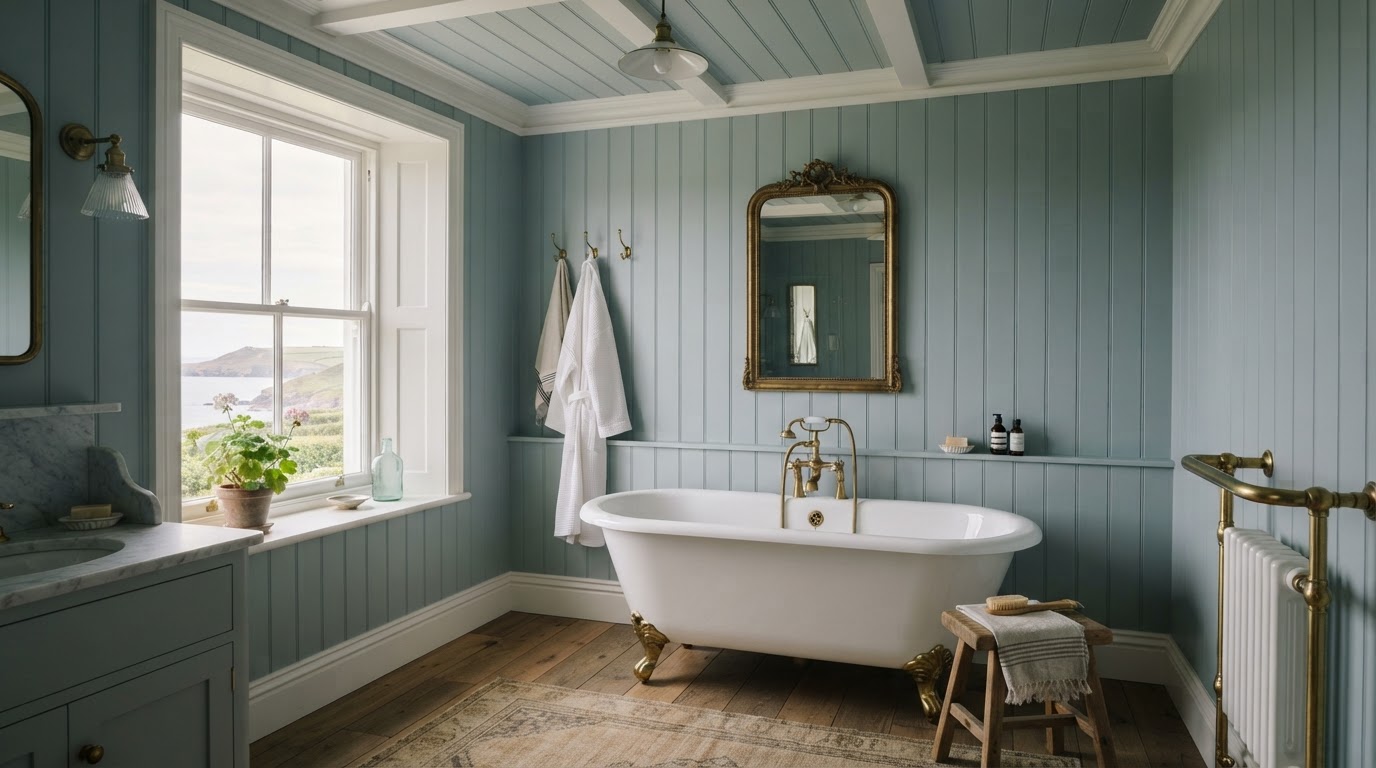
Why Tongue and Groove Suits a Cornish Bathroom
There is something about tongue and groove panelling that suits a Cornish bathroom perfectly. It echoes the cladding of a coastal barn, the lining of a beach hut, the warm, painted timber of a cottage interior. It's the most naturally sympathetic finish for a bathroom in a period Cornish home, and it's one of the joinery features we're asked to build most often.
Beyond its looks, tongue and groove is genuinely practical in a bathroom. It protects walls from splashes and condensation, it copes with the humidity better than bare plaster, and it gives a room a warmth and texture that tiled walls cannot match. A tongue and groove bathroom is a room that feels cared for, not merely maintained.
The combination of character and practicality is what makes tongue and groove such a good choice for a Cornish bathroom. It's a finish that looks right and works hard, and when it's fitted properly, it lasts for years.
Moisture-Resistant Timber and Proper Sealing
The secret to tongue and groove in a bathroom is the right timber, properly sealed. We use moisture-resistant MDF for painted panelling — it's stable, flat, and unaffected by the humidity that can warp natural timber. For a natural timber finish, we use species that cope with moisture — cedar, oak, or ash — sealed with water-resistant oils or lacquers.
Every cut edge is sealed, every joint is fitted tightly, and every fixings is either stainless steel or brass. The panelling is fitted with a small gap at the floor to prevent water wicking up, and the bottom edge is sealed to protect the timber. A properly sealed, well-fitted tongue and groove will stay pristine for years; a badly fitted one will fail within months.
The difference is in the detailing. The same tongue and groove profile, fitted carelessly, can swell and cup; fitted properly, it's a robust, long-lasting finish. It's a detail that's invisible in the finished room but decisive in its longevity.
Painted Finishes: The Colour Is the Character
A tongue and groove bathroom is almost always painted, and the colour is its character. The classic choices — soft greens, greys, blues, and warm off-whites — suit Cornish bathrooms beautifully, echoing the colours of the coast and the countryside. We paint to any Farrow & Ball, Little Greene, or Dulux shade, colour-matched for a flawless finish.
The finish itself matters as much as the colour. We use water-based, low-VOC bathroom paints that are hard-wearing, wipe-clean, and resistant to the humidity of a bathroom. The paint is applied in multiple coats, with sanding between, for a smooth, durable finish that will still look good after years of steamy showers.
A painted tongue and groove bathroom in the right colour is a genuinely timeless thing. It suits the house, it suits the light, and it ages gracefully — the kind of finish that looks as good in ten years as it does on the day it's painted.
Full-Height or Half-Height: Which to Choose
Tongue and groove can run full-height up a bathroom wall, or stop at dado-rail height with tiling or plaster below. Full-height gives the most traditional, cottage feel and protects the whole wall; half-height gives a lighter, more contemporary look and lets you combine timber with tiles for a layered finish. Each has its place.
Full-height panelling, with a timber cornice at the ceiling, is the classic choice for a Cornish cottage bathroom. It wraps the room in warm, painted timber and feels as though it has always been there. Half-height, with tiling below and panelling above, is lighter and suits a more modern bathroom, or a room where you want to mix materials.
We advise on the right approach for your bathroom — the height, the profile, the colour, the finish — so the panelling suits the room and the house. A tongue and groove bathroom should feel of a piece with the rest of the home, and the details are what make that happen.
Around the Bath and the Basin
Tongue and groove is particularly effective around a bath and a basin. A bath panelled in matching tongue and groove ties the room together, and panelling around a basin — with a fitted vanity below — gives a bathroom a furniture-like quality that freestanding units can't match. It's the detail that makes a bathroom feel designed rather than assembled.
We build bath panels and basin surrounds in the same tongue and groove as the walls, with access panels for the plumbing where needed. The panelling is fitted to the exact dimensions of the bath and basin, scribed to the floor and the walls, and finished to match. The result is a bathroom where every element is of a piece.
For a Cornish bathroom, where the bath is often the focal point and the basin often sits in an awkward spot, tongue and groove joinery pulls the room together. It's a small detail that makes a big difference to how the room feels.
Matching the Rest of the Home
A tongue and groove bathroom should feel of a piece with the rest of the home. We paint the panelling to match the hallway or the landing, detail it to suit the period, and design it to sit within the house rather than as a standalone room. The result is a bathroom that feels connected to the home, not separate from it.
For a Cornish cottage or a period home, that continuity is what makes a bathroom feel right. A tongue and groove bathroom that matches the rest of the house feels like part of the building's story, and it's the kind of detail that makes a home feel considered throughout.
Done well, a tongue and groove bathroom is a room that's both practical and beautiful — a hard-wearing, characterful, timeless finish that suits a Cornish home perfectly. It's one of the most satisfying pieces of joinery we build.
Frequently Asked Questions
Quick answers to the questions we hear most about Tongue & Groove Bathroom Panelling for Cornish Homes.
Is tongue and groove suitable for a wet bathroom?+
Yes, when it's properly detailed. We use moisture-resistant MDF or suitable timber, seal every cut edge, use stainless or brass fixings, and leave a sealed gap at the floor. Properly fitted, it lasts for years.
Full-height or half-height panelling?+
Full-height gives the most traditional, cottage feel and protects the whole wall; half-height is lighter and lets you combine timber with tiles. We advise based on your room and your style.
Can you match the panelling to the rest of my home?+
Yes. We paint the panelling to match your hallway or landing, detail it to suit the period, and design it to sit within the house so the bathroom feels connected to the rest of the home.
Related Articles

Maximising Space with Custom Wardrobes in Cornwall
Discover how bespoke fitted wardrobes can transform your bedroom, providing optimal storage solutions while enhancing your room's aesthetic appeal.

Choosing the Right Wood for Your Kitchen Carpentry
Not all wood is created equal. Learn about the best timber choices for durability, aesthetics, and moisture resistance in your custom kitchen.

How to Maintain Your Outdoor Decking in Cornwall
Cornish weather can be tough on timber. Here are our top tips for treating, cleaning, and maintaining your decking so it lasts for years.
Ready to Start Your Project?
Get in touch for a free, no-obligation consultation about your bespoke carpentry project in Cornwall.
Request A Quote