
Sustainable Garden Rooms & Eco-Friendly Outdoor Design
How a sustainable, eco-friendly garden room is designed and built for a Cornish garden, with responsibly sourced timber, sedum roofs, natural insulation and a light footprint.
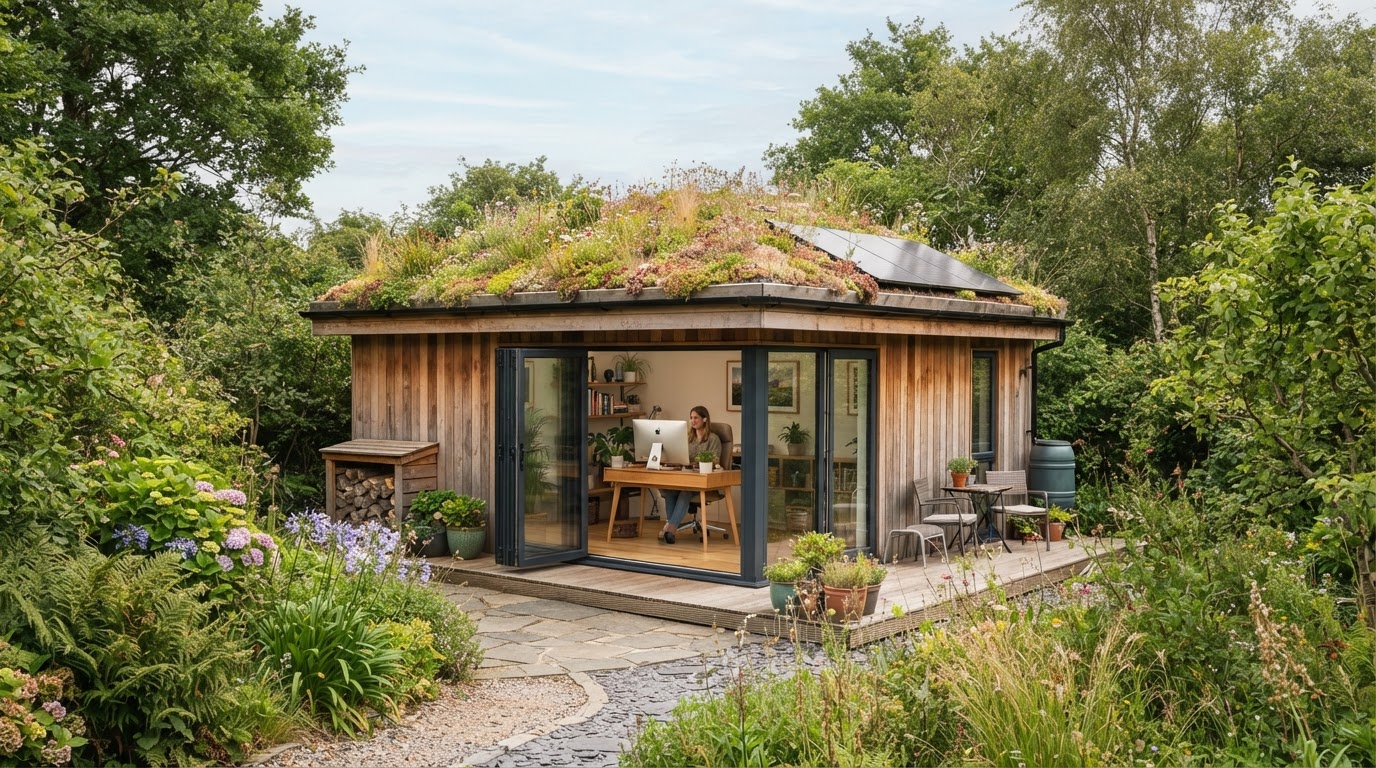
A Garden Room That Treads Lightly
A garden room is, by its nature, one of the lighter-footprint buildings you can add to a property. Built from timber, sited in a garden rather than a green field, and small enough to need modest foundations, it carries a fraction of the embodied energy of a brick extension. A sustainable garden room takes that inherent advantage and pushes it further.
The choices that make a garden room genuinely sustainable are the same ones that make it a better building: responsibly sourced timber, natural insulation, a living or reflective roof, and design that minimises energy use over its lifetime. None of these are sacrifices — they are simply better choices, and they result in a building that is more comfortable, more durable, and more in keeping with its garden setting.
For a Cornish garden, a sustainable garden room is the natural choice. It respects the setting, it uses materials that suit the climate, and it gives you a year-round room without the environmental cost of a traditional build. It is a building you can feel good about as well as enjoy.
Responsibly Sourced Timber
The skeleton of a garden room is timber, and the source of that timber is its biggest environmental lever. We specify FSC- or PEFC-certified timber for the frame, cladding, and internal joinery, so the wood can be traced back to a well-managed forest. For cladding, British-grown larch or cedar is a low-transport, durable choice that weathers beautifully.
Reclaimed timber has a place in garden rooms too, particularly for internal floors, shelving, and feature elements. A reclaimed timber floor in a garden room carries character and an almost-zero footprint, and it suits the garden setting perfectly. We are happy to incorporate reclaimed timber wherever it is appropriate.
The point is that the timber in a sustainable garden room is chosen deliberately. Each piece is specified for its source, its durability, and its suitability, so the building is responsible from the frame up. It is the foundation of an eco-friendly build.
Natural Insulation
Insulation is what makes a garden room usable year-round, and the choice of insulation is what makes it sustainable. Conventional rigid foams and mineral wools work, but they carry an industrial footprint. Natural insulations — sheep's wool, wood fibre, and cellulose — perform as well, manage moisture better, and are dramatically lower-impact.
Wood fibre insulation, in particular, is an excellent choice for a garden room. It is made from waste wood, it is breathable, it has excellent thermal and acoustic performance, and it is genuinely sustainable. Sheep's wool is another natural option, with the added benefit of regulating humidity. Both make a garden room warmer in winter, cooler in summer, and quieter year-round.
A naturally insulated garden room is also a healthier room. Breathable insulation manages moisture naturally, preventing the condensation and mould that can plague a poorly detailed conventional build. It is better for the building and better for the people in it.
Living and Reflective Roofs
The roof of a garden room is an opportunity. A sedum roof — a shallow layer of low-growing plants on a waterproof membrane — absorbs rainwater, insulates, supports biodiversity, and looks beautiful from any upstairs window. It is the signature of a sustainable garden room, and it suits a Cornish garden perfectly.
For a lower-maintenance option, a reflective or green roof can be combined with a more conventional finish, or a warm-roof construction with a long-lasting membrane can be specified. Each has its place, and we advise on the right roof for the building's location, aspect, and intended use.
A living roof is the detail that most clearly declares a garden room's sustainable intentions. It is a small piece of the building, but it is the piece that gives back — to the garden, to wildlife, and to the climate. It is the feature that makes a garden room genuinely green.
Energy, Heating, and Lighting
A sustainable garden room is designed to need very little energy. With high levels of insulation, good airtightness, and a sensible glazing strategy, it stays warm with minimal heating and cool with no air conditioning. A small, efficient heater — an infrared panel or a small air-source heat pump — is usually all that is needed for year-round comfort.
Lighting is low-energy LED throughout, and we can integrate solar panels on a suitable roof to offset the building's small electrical demand. Daylighting — carefully placed windows and rooflights — means the room needs no artificial light for most of the day, which is both sustainable and genuinely pleasant to work in.
The result is a building that costs very little to run and treads very lightly on the planet. A sustainable garden room is, over its lifetime, one of the lowest-impact rooms you can add to a Cornish property — and one of the most comfortable.
Siting and Minimising Disruption
Sustainability starts before the build, with the siting. A garden room placed to benefit from natural light and shelter, without removing mature trees or disrupting established planting, treads more lightly on the garden from the outset. We advise on siting as part of the design, so the building works with the garden rather than against it.
We also minimise disruption during the build. A timber garden room is constructed largely off-site in our workshop, so the on-site phase is shorter, quieter, and less disruptive than a conventional build. Foundations can be screw piles or a low-impact pad system rather than a deep concrete trench, further reducing the footprint of the build.
The result is a building that arrives gently in the garden, settles in quickly, and leaves the rest of the garden undisturbed. A sustainable garden room is not just about materials — it is about the whole approach, from first siting to final fit-out.
Frequently Asked Questions
Quick answers to the questions we hear most about Sustainable Garden Rooms & Eco-Friendly Outdoor Design.
What makes a garden room sustainable?+
Responsibly sourced or reclaimed timber, natural insulation like wood fibre or sheep's wool, a living or reflective roof, low-energy design, and minimal-impact siting and foundations. It treads lightly on the garden and the planet.
Do sedum roofs need much maintenance?+
Very little. A sedum roof needs an occasional check and a light trim, but the plants are drought-tolerant and self-sustaining for most of the year. We advise on the small amount of care needed.
Can a garden room be off-grid?+
Yes. With solar panels, a small battery, and an efficient heater, a garden room can run largely off-grid. We design the electrical strategy to suit how you intend to use the room.
Related Articles

Maximising Space with Custom Wardrobes in Cornwall
Discover how bespoke fitted wardrobes can transform your bedroom, providing optimal storage solutions while enhancing your room's aesthetic appeal.

Choosing the Right Wood for Your Kitchen Carpentry
Not all wood is created equal. Learn about the best timber choices for durability, aesthetics, and moisture resistance in your custom kitchen.

How to Maintain Your Outdoor Decking in Cornwall
Cornish weather can be tough on timber. Here are our top tips for treating, cleaning, and maintaining your decking so it lasts for years.
Ready to Start Your Project?
Get in touch for a free, no-obligation consultation about your bespoke carpentry project in Cornwall.
Request A Quote