
Restoring Period Sash Windows in Cornish Homes
How period sash windows are restored in Cornish homes, from repairing sashes and replacing cords to draught-proofing and matching architrave for a weathertight, working window.
The Value of the Original Window
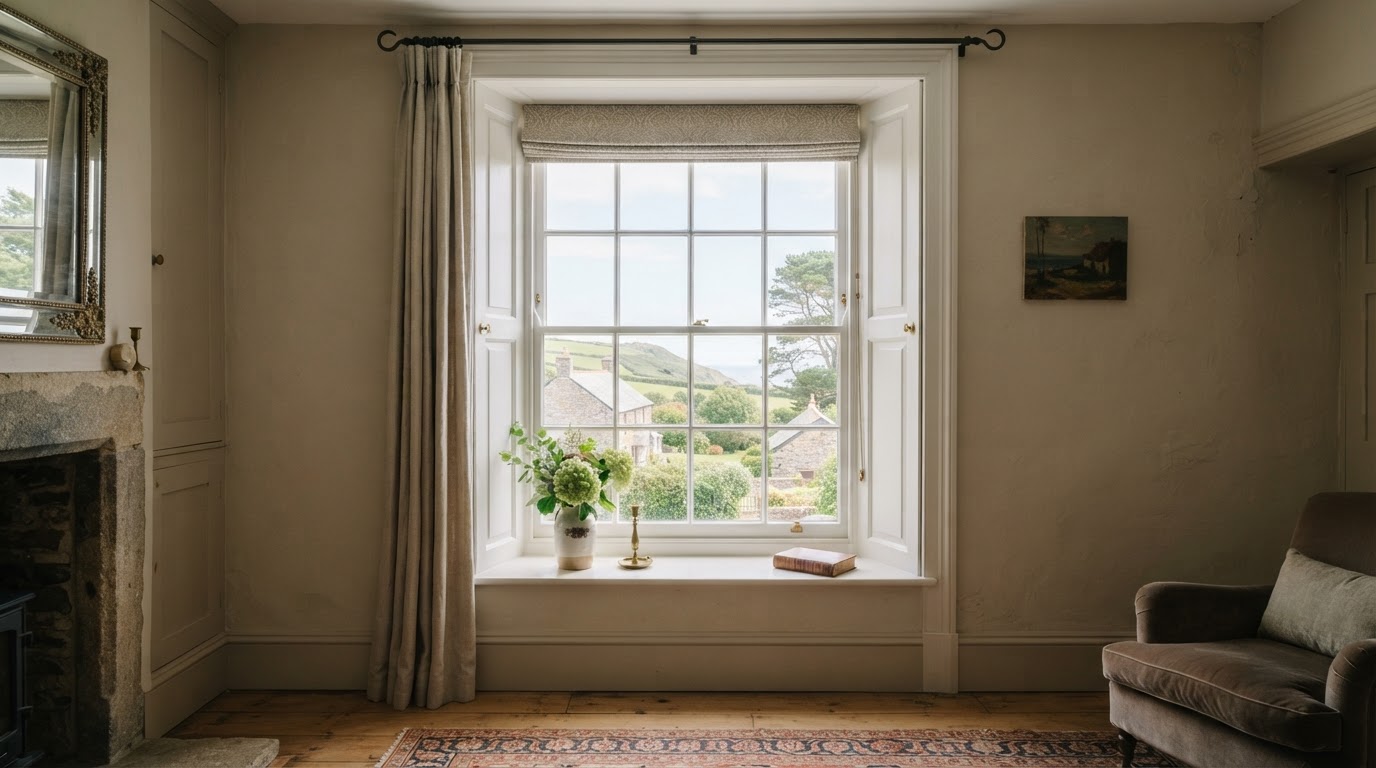
Original sash windows are one of the most characterful features of a period Cornish home. The proportions, the glazing bars, the depth of the reveal — these are the details that give a Georgian or Victorian house its identity, and they are almost always worth preserving. Replacement plastic windows, however well-intentioned, change the character of a building for the worse.
Restoration is the better answer. A well-restored sash window, properly draught-proofed, performs almost as well as a modern window for heat retention while retaining every ounce of the original character. The glass may be a little less efficient, but the joinery, repaired and maintained, will outlast any modern unit.
The case for restoration is both aesthetic and practical. A restored sash window looks right, works properly, and lasts for generations. It is one of the most rewarding pieces of joinery work a period homeowner can commission.
Repairing Rather Than Replacing Sashes
The most common fault in an old sash window is rot in the lower sections — the bottom rail, the lower sash, and the sill — where water has sat and the timber has decayed. The off-the-shelf answer is to replace the whole window. The joiner's answer is to cut out the rot and splice in new timber, preserving the original window.
We splice in new sections of matching timber — typically a durable softwood or hardwood — scarfing them into the original sash with sound glued joints. The repair is invisible when painted, structurally sound, and preserves the original glazing and glazing bars. A sash repaired this way will last as long as the house.
This is skilled, patient work, but it is almost always preferable to replacement. A repaired original sash keeps the character, the proportions, and often the original glass, with its gentle imperfections, that give a period window its soul.
Replacing Sash Cords and Weights
Sash cords fail — they fray, they snap, and the sash drops. Replacing them is one of the simplest and most satisfying restorations. We strip the window, remove the old cords, replace them with modern waxed sash cord that will last decades, and re-hang the weights.
Where the original weights have been lost, we can replace them with lead weights sized to balance the sash perfectly. For windows that have been fitted with heavy modern glass, we can use spiral balances or heavier weights to take the load. The aim is a sash that glides up and down with fingertip pressure and stays where you leave it.
A sash that works properly is a quiet pleasure. It slides, it stays, and it doesn't rattle. That simple, satisfying operation is what these windows were designed for, and it is the goal of every restoration.
Draught-Proofing Without Changing the Window
The biggest complaint about old sash windows is draughts. The gap around a sash, necessary for it to slide, lets in cold air, dust, and noise. Modern brush draught-proofing, fitted into routed grooves in the staff bead, parting bead, and sash, seals that gap almost completely without changing the appearance of the window.
We route the beads and sashes, fit discreet brush seals, and reinstall. The window looks identical — same proportions, same glazing bars, same depth of reveal — but it is dramatically more airtight. Draughts are eliminated, rattles stop, and the room is noticeably warmer and quieter. It is the single most effective upgrade for an original sash.
Combined with a repaired sill and new parting beads, a draught-proofed sash window performs remarkably well. It is the restoration that pays back fastest, in comfort and in reduced heating bills, while preserving the character that makes the window worth keeping.
Matching Architrave and Window Surrounds
The joinery around a sash window — the architrave, the sill, the internal lining — is as much a part of its character as the sash itself. Where these have been removed, damaged, or replaced with the wrong profile, the window looks wrong even if the sash is perfect.
We machine and fit replacement architrave in period profiles to match existing joinery — ogee, torus, lambs tongue — and reinstate sills and linings where they have been lost. The result is a window that reads as a whole, with the joinery inside and out consistent with the period of the house.
For a Cornish period home undergoing restoration, reinstating the correct architrave and surround is often the detail that completes the room. It is the kind of joinery that, done right, you don't notice — but done wrong, you notice immediately.
When to Restore and When to Replace
Not every sash can be saved. Where rot has gone too far, where the original has been lost entirely, or where planning and energy requirements demand it, a like-for-like replacement in timber is the answer. We manufacture new sashes and frames to match the original, with traditional glazing bars and the same proportions, so a replacement window reads as original.
The decision to restore or replace is made window by window, and we will always advise restoration where it is viable. A repaired original is preferable to even the best replacement, both for character and, increasingly, for sustainability. But where replacement is necessary, a properly made timber sash is the right substitute.
Either way, the goal is the same: a window that looks right, works properly, and lasts. A restored or well-made replacement sash is one of the best investments a period Cornish homeowner can make.
Frequently Asked Questions
Quick answers to the questions we hear most about Restoring Period Sash Windows in Cornish Homes.
Can a rotten sash window be repaired rather than replaced?+
In most cases, yes. We cut out rot and splice in new timber, preserving the original sash, glazing bars, and often the original glass. It's almost always preferable to replacement.
Does draught-proofing change the look of the window?+
No. The brush seals are fitted into routed grooves in the beads and sash, so they are discreet and the window looks identical — but it is dramatically more airtight.
Can you make new sash windows to match the originals?+
Yes. Where an original cannot be saved, we manufacture new timber sashes and frames to match the original proportions, glazing bars, and detailing.
Related Articles

Maximising Space with Custom Wardrobes in Cornwall
Discover how bespoke fitted wardrobes can transform your bedroom, providing optimal storage solutions while enhancing your room's aesthetic appeal.

Choosing the Right Wood for Your Kitchen Carpentry
Not all wood is created equal. Learn about the best timber choices for durability, aesthetics, and moisture resistance in your custom kitchen.

How to Maintain Your Outdoor Decking in Cornwall
Cornish weather can be tough on timber. Here are our top tips for treating, cleaning, and maintaining your decking so it lasts for years.
Ready to Start Your Project?
Get in touch for a free, no-obligation consultation about your bespoke carpentry project in Cornwall.
Request A Quote